Integrating Framework of Methodologies for Governance and Management
Agile, Rapid, Dynamic and Elastic.
Every organization operates between two forces: run the business, which generates present results, and change the business, which develops the capabilities on which its future success will depend. P4MGO!® is the Integrating Framework of Methodologies for Governance and Management that governs both so that the organization can sustain its Organizational Equilibrium.
It brings together, in a common language, the disciplines that make this possible, from the decision on what to change to the service delivered every day, and it is incorporated into the methodology the organization already applies, without requiring it to start from scratch.
Explore the methodologies Access the Foundations
A framework created by Javier Peris.
Why P4MGO!® exists
When each part delivers, the whole does not necessarily advance.
It is a phenomenon common to organizations of every size and sector. Each area performs its function well, each department can demonstrate that it has met its objectives and yet the strategy never quite materializes.
Public administration
A regional government department structured into vertical directorates. A family with diverse needs must deal with several of them, provide the same information to each one and wait. Each directorate can demonstrate that it has done its part.
Private enterprise
An industrial company that decides to transform its production. Decisions on technology investment, process improvement and the development of new services are made in separate committees with little coordination. No area fails and, even so, the whole does not advance.
Startup
A six-person company in which several roles fall to the same person. This is perfectly valid, provided it is clear which role that person is acting in at each moment: what matters is not the number of people, but that every responsibility has an owner.
The idea behind it
Two essential forces, evaluated by opposing criteria.
Run the business is the operation that generates present results; its mandate is that the commitments made yesterday are fulfilled today without incident. Change the business comprises the initiatives the organization undertakes to develop the capabilities its future success will require. Both are essential, but they answer to opposing measures of success and call for different forms of governance.
change the business
Change
It adapts the organization, drives innovation, puts strategy into practice and develops the capabilities of the future. This is where portfolios, programs, projects and digital products belong.
PfM PgM PjM PdM
run the business
Run
It delivers services, serves customers or citizens and maintains systems. Its success is measured by the absence of incidents. This is where services, operations and processes belong.
BPM S&O
The ultimate goal
Organizational Equilibrium
The dynamic, systemic capability to harmonize operational stability with transformation. It is not a state achieved once and for all: it is sustained over time, because the point of equilibrium shifts every time the market, regulation, technology or strategy changes.
“Judging change by the criteria of run kills it; judging run by the criteria of change breaks it.”
Governing and managing
Those who govern are accountable for doing the right things; those who manage are accountable for doing things right.
This is the distinction that underpins all of P4MGO!®. In every discipline there is someone who manages: they decide autonomously on everything within their authority and tolerances, and escalate, with their recommendation, whatever exceeds them. And there is someone who governs: they are accountable for the outcome to whoever delegated to them, approve what is escalated to them and ensure that the initiative remains justified.
Because their decisions differ, so does their training. For this reason, each discipline offers two courses, one in each track.
Managers track
Management
For professionals responsible for managing. Portfolio Management, Program Management, Project Management, Digital Product Management, Business Process Management, and Service and Operations Management.
Owners track
Governance
For professionals responsible for leading. Portfolio Governance, Program Governance, Project Governance, Digital Product Governance, Process Governance, and Service and Operations Governance.
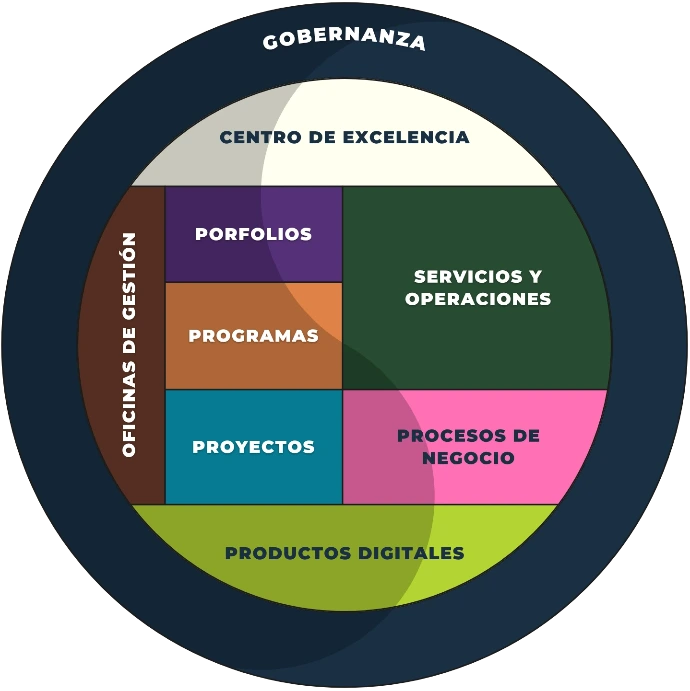
The map of the framework
Each methodology has its place in the cycle.
The P4MGO!® Organizational Equilibrium Life Cycle depicts the entire organization in a single image. A portfolio decision unfolds into programs, projects and digital products; what they build is incorporated into the operation as processes and services; and the Center of Excellence measures the results and feeds improvements, changes and opportunities back to the portfolio. Throughout that journey, two things flow simultaneously: value, toward those who receive the services, and control, toward those who make decisions.
Governance is the outer ring that encompasses everything. The Center of Excellence occupies the upper band, because it acts in both domains. The Management Offices form the side strip, on the change side only. The change column groups portfolios, programs and projects; the run column, services and operations, and processes. At the base are digital products, which are built and operated in a single flow.
The methodologies
A discipline for every responsibility.
Each one has its own book, its own certification and its two tracks, Management and Governance. An organization may need only one of them, and P4MGO!® imposes no set path: you begin where the problem lies.
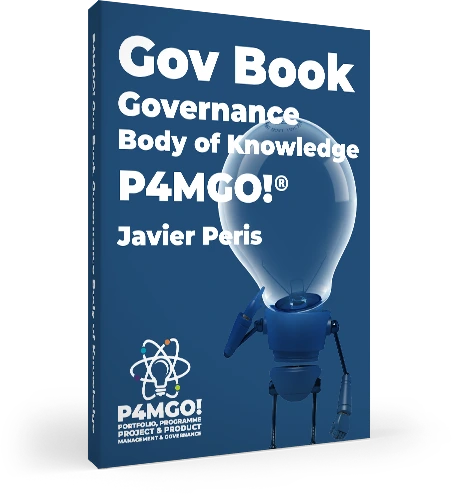
P4MGO!® Gov · Governance
So that what Governance decides is carried out, reaches those who must execute it intact, and its fulfillment can be verified.
Advanced · Management and Governance
Explore the methodology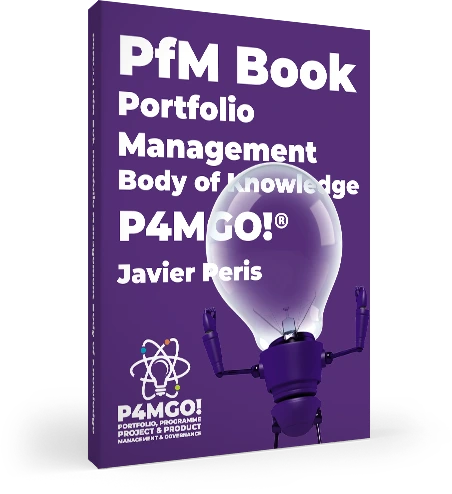
P4MGO!® PfM · Portfolio Management
To decide what to change, in what order and with what resources, and to determine how many initiatives the organization can take on at once.
Intermediate · Management and Governance
Explore the methodology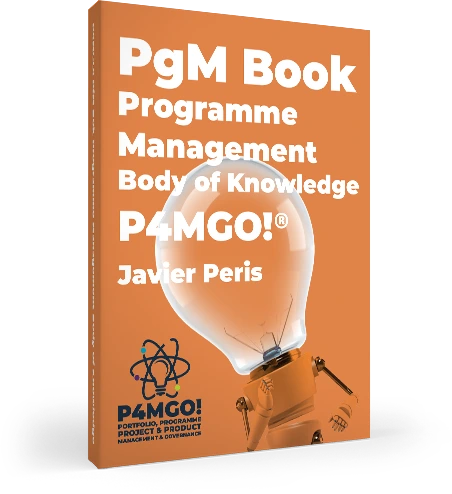
P4MGO!® PgM · Program Management
To achieve benefits and new capabilities, and not to consider the change complete until the benefit materializes.
Intermediate · Management and Governance
Explore the methodology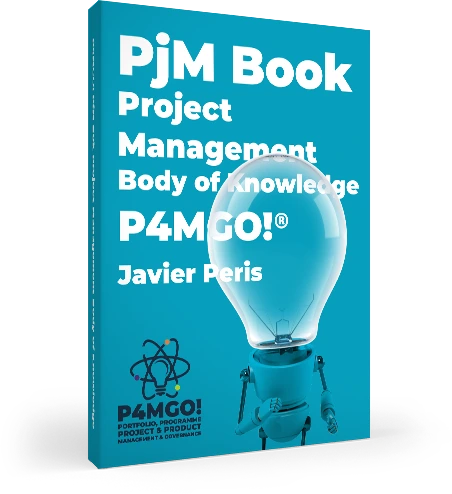
P4MGO!® PjM · Project Management
To deliver what was committed: this scope, on this schedule, at this cost and with this quality.
Intermediate · Management and Governance
Explore the methodology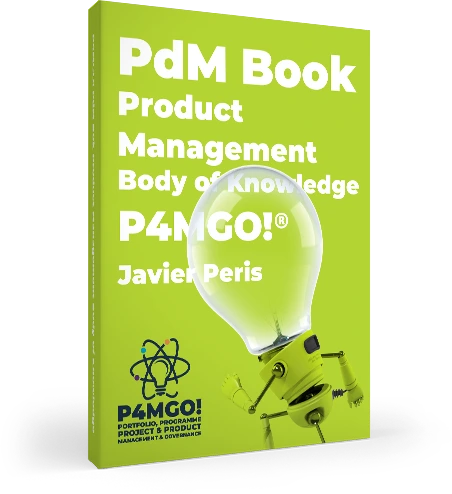
P4MGO!® PdM · Digital Product Management
To build and operate, in a single flow, everything that requires programming or development, and to sustain it throughout its useful life.
Intermediate · Management and Governance
Explore the methodology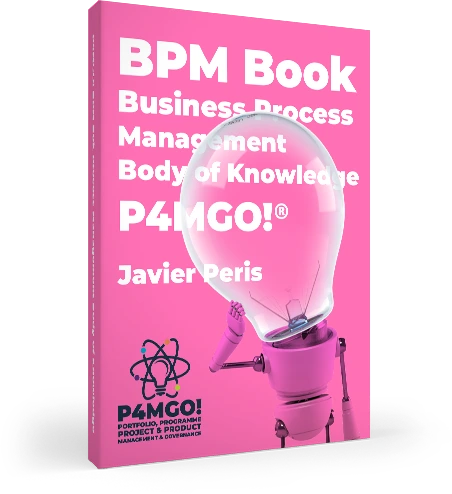
P4MGO!® BPM · Business Process Management
To understand how work is actually done, measure it and determine what needs to change.
Intermediate · Management and Governance
Explore the methodology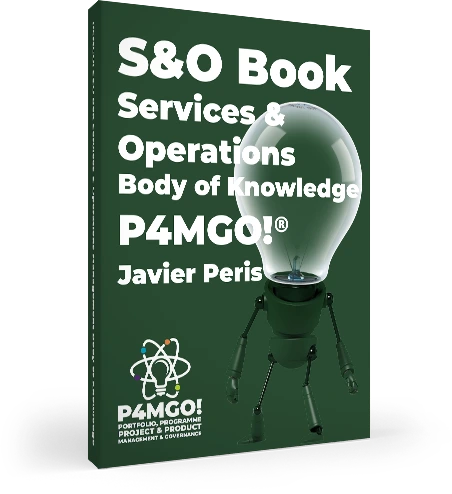
P4MGO!® S&O · Service and Operations Management
So that services meet their commitment every day, which is where benefits materialize and are measured.
Intermediate · Management and Governance
Explore the methodology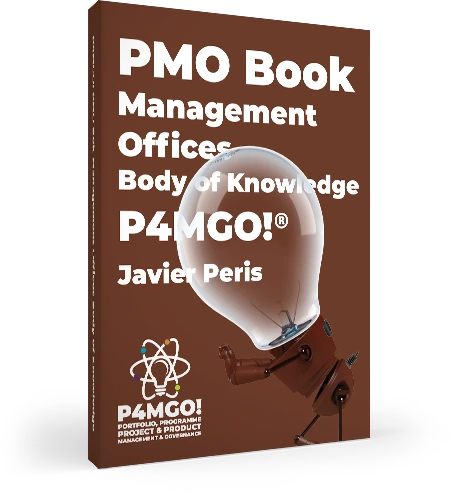
P4MGO!® PMO · Management Offices
So that information reaches decision makers with the quality and frequency each decision requires.
Advanced · Management and Governance
Explore the methodology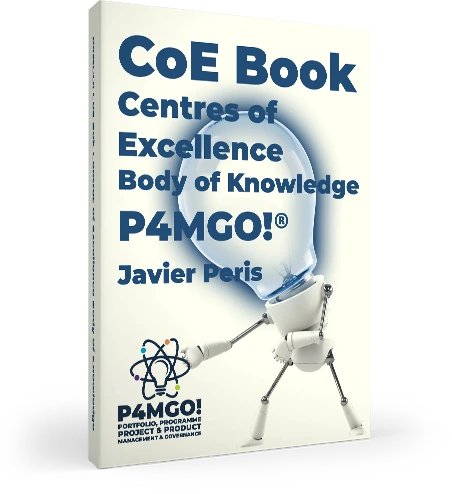
P4MGO!® CoE · Center of Excellence
So that the organization makes better decisions: it listens to run and change, matures initiatives and safeguards good practices.
Advanced · Management and Governance
Explore the methodologyA concept original to the framework
Steering Speed
Steering Speed is the amount and pace of change that an organization's run the business can absorb. It depends on many factors, such as the organization's economic, financial, political and circumstantial situation, and it varies constantly.
Above it lies haste: more change is introduced into the operation than it can absorb, the business collapses, waste appears and initiatives never get implemented. Below it lies inaction: opportunities and capabilities go unused, discouragement spreads and resources are underutilized. Both are forms of misgovernance.
Knowing the Steering Speed at every moment is the responsibility of senior leadership, and P4MGO!® gives it the means to do so: the Center of Excellence makes it visible through the Radar.
Principle of complementarity
Integrate what already works, rather than replace it.
No organization starts from scratch, and P4MGO!® does not ask it to. It respects the methodology each area already has in place and integrates with it to complete what is missing. In return, it requires only one thing: reporting through a common indicator scorecard, the Radar. This makes it possible to verify that each methodology is applied correctly, gives the Center of Excellence the information it needs and allows senior leadership to assess the health of the whole.
Two departments that manage their projects differently do not need to be standardized to be comparable: it is enough that they report using the same scorecard.
The point of entry
Everything begins with the Foundations.
Before specializing in a discipline, each professional acquires the common framework in the track that corresponds to their role. Each track has its own Foundations and its own book, always delivered by Business&Co.® on its campus. In this way, everyone who works with P4MGO!®, regardless of where they are and with whom they train, shares the same foundation.
P4MGO!® Foundations for Managers
For professionals responsible for managing portfolios, programs, projects, digital products, processes, services and operations.
P4MGO!® Foundations for Owners
For professionals responsible for leading them.
Already hold P4MGO!® Essentials?
Holders of P4MGO!® Essentials do not start over: they upgrade to Foundations for Managers or for Owners through a free bridge course upon purchasing any intermediate-level course.
How the upgrade worksThe network of accredited organizations
P4MGO!® training and implementation through accredited organizations.
Two types of accredited organizations bring the framework wherever it is needed.
ATO · Accredited Training Organization
For training
For training in a discipline, ATOs (Accredited Training Organizations), training organizations accredited in P4MGO!®, deliver the intermediate and advanced courses, in both the Management track and the Governance track, and prepare candidates for certification. Their trainers hold the Accredited Trainer level.
Discover the ATOsACO · Accredited Consulting Organization
For implementation
For an organization to work with P4MGO!®, ACOs (Accredited Consulting Organizations), consulting firms accredited in P4MGO!®, implement it with professionals certified in each methodology being implemented, respecting what already works.
Discover the ACOsP4MGO! Community
The evolution of the framework, firsthand.
Updates to P4MGO!®, new books and the organizations joining the network are communicated first to the P4MGO! Community, which also brings together the ambassadors who promote the framework in their country and their sector.